The 2026 Regulatory Changes: Safer Sleep, Screen Use and SEND Reform
From 1 September 2026 the EYFS frameworks change again — safer sleep written into the framework, a new screen use duty, tighter DBS and reporting rules, and SEND reform reshaping early identification. Here is what to actually do.
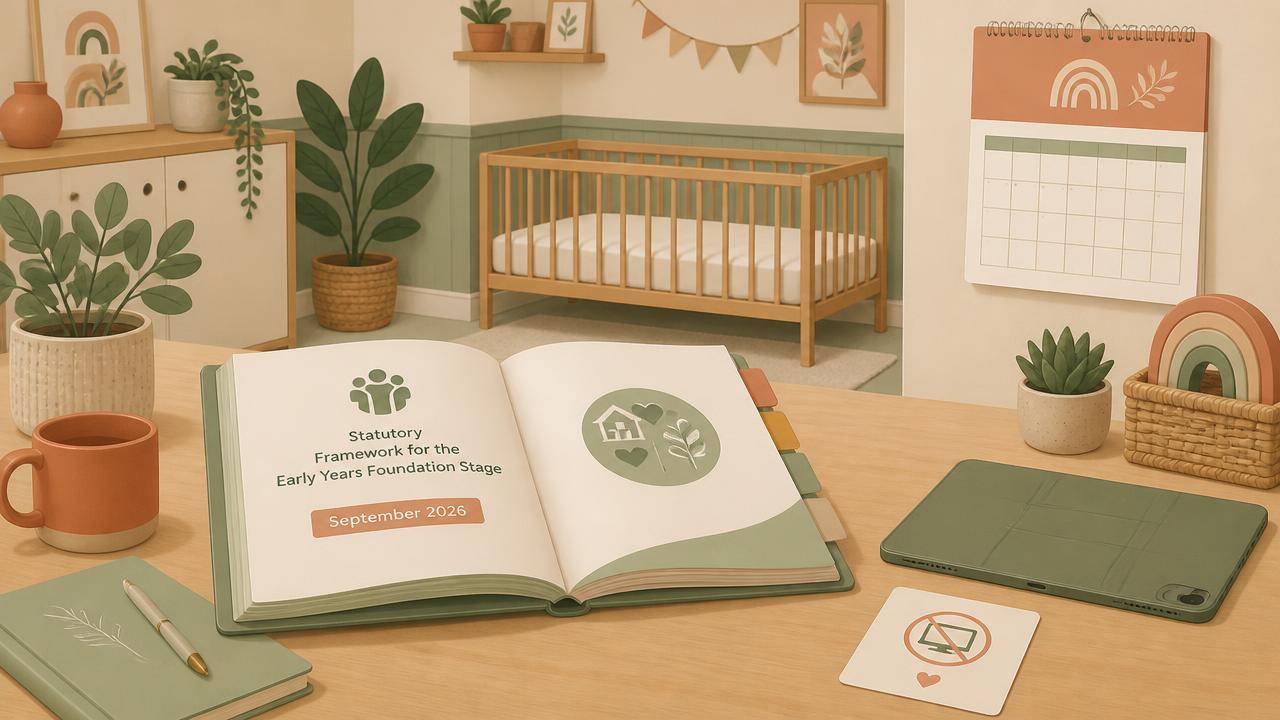
Two versions of the EYFS statutory framework — one for childminders, one for group and school-based providers — were published on 13 July 2026 and take effect on 1 September 2026. Alongside them sit new DfE screen use guidance for settings and the biggest proposed SEND shake-up in a decade.
If you read one thing before the autumn term, read this. Four changes matter to your policies, your rotas and your recruitment.
1. Safer sleep is now in the framework itself
Previously safer sleep sat in separate guidance. The 2026 frameworks bring explicit safer sleep wording into the main body of the EYFS, produced with The Lullaby Trust. Practically, that moves it from "good practice we follow" to "a requirement an inspector can hold you to".
What to do:
- Rewrite your sleep and rest policy against the framework wording — back sleeping, a clear firm flat mattress, feet-to-foot, nothing loose in the cot, own sleep space, room temperature, and stated supervision and check intervals
- Retrain every baby-room practitioner and record the date in supervision notes, not just a training register
- Walk your sleep room today: cot bumpers, pods, wedges, heavy blankets and soft toys all need to go
- Agree what you do when a parent asks for something that conflicts with safer sleep, and write down your answer before you are asked
2. A new duty on children's screen use
Both frameworks now require providers to have regard to the DfE's screen use guidance for early years settings. It builds on the parent guidance published in March 2026 and was shaped by the Digital Standards Early Years Action Group and the Early Years Screen Time Advisory Group.
"Have regard to" does not mean screens are banned. It means you must be able to explain your decisions.
What to do:
- Write a one-page screen use policy: when screens are used, for how long, with what adult interaction, and what they never replace
- Audit room by room — interactive whiteboards, tablets, TVs, and the background music video nobody decided to switch on
- State your under-2s position explicitly and give your reasoning
- Put screen use in your curriculum intent notes so it reads as pedagogy rather than convenience
- Tell parents at handover and in the welcome pack, so home and setting messages match
3. Tighter welfare, recruitment and reporting rules
Easy to miss and quick to catch you out:
- The reporting threshold changes: you must tell Ofsted or your childminder agency about allegations of **harm**, not only **serious harm**
- Enhanced DBS checks are now required for volunteers, including supervised volunteers
- New employees must not begin employment before their check has been received
- The list of information staff must disclose about their suitability has been widened
- Registered childcare cannot be provided from premises where a banned dog breed is kept or present — nannies must also take reasonable steps to avoid one being present
- Group providers operating on domestic premises must notify Ofsted or their CMA about changes to anyone aged 16 or over living or working there
- The early years qualifications requirements and standards document is updated from 1 September 2026 to clarify Level 2 English requirements
What to do: change the threshold wording in your safeguarding policy, sweep your volunteer list for missing enhanced checks, remove any practice of letting new staff start "pending DBS", and update your staff suitability declaration form.
4. SEND reform is coming for early identification
In February 2026 the DfE published the schools white paper **Every Child Achieving and Thriving** alongside the **Putting Children and Young People First** SEND consultation, which has now closed. The direction is clear: much earlier identification, more need met through ordinarily available inclusive provision, and less reliance on statutory plans as the gateway to support. Early years is named as where identification should begin.
What to do now, before the outcome lands:
- Build a documented check-in point for every child at two, and again before school transition
- Evidence a full Assess–Plan–Do–Review cycle for every child on SEN Support before any statutory request
- Map what you already deliver without extra funding — that is your ordinarily available provision evidence
- Give your SENDCO protected, recorded non-contact time and a CPD budget
- Open the health and local authority conversation early: health visitor, speech and language, area SEND team
A four-week plan for the autumn term
- **Week 1:** read the framework version that applies to you and log the changes in your framework changes log
- **Week 2:** rewrite the sleep policy and the safeguarding reporting threshold; brief the whole team
- **Week 3:** publish the screen use policy and complete the room-by-room audit
- **Week 4:** volunteer DBS sweep, suitability declaration refresh, and a SEND early identification review with your SENDCO
Settings that treat 1 September as the deadline for reading will spend the autumn catching up. Settings that treat it as the deadline for evidence will spend it working normally.
Early Years Circle members get every one of these changes as a regulatory briefing by email — plain-English summary, effective date and a ready-made "what to do now" checklist — plus the editable policy templates to action them.
Get the Ofsted Readiness Checklist
The questions inspectors actually ask, room by room. Pop in your email and it's yours — just your email, no payment.
Send me the checklist