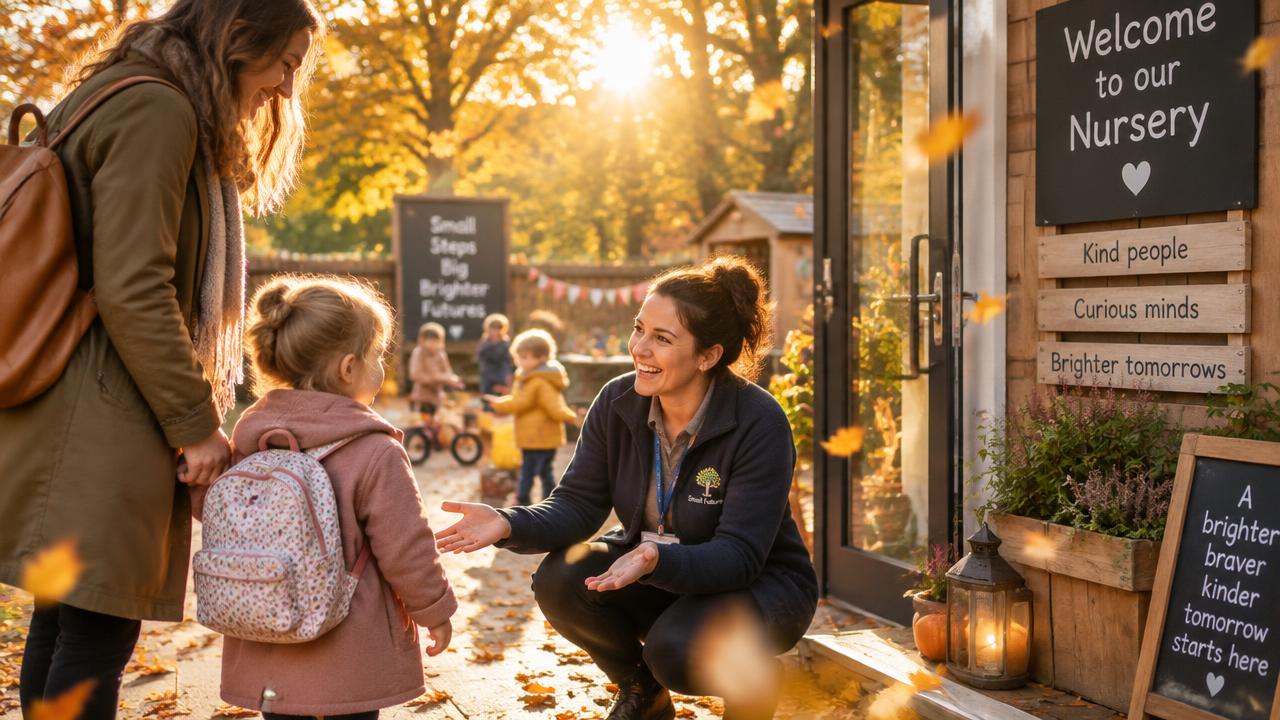
November Festivals in the Early Years: Bonfire Night, Diwali, Thanksgiving and an Inclusive Halloween
November sparkles with festivals — Bonfire Night, Diwali and Thanksgiving — and Halloween's tail end needs thoughtful planning too. Here's how to celebrate the season while keeping every child included, with both spooky and non-spooky options, and how to look after children and pets during fireworks.
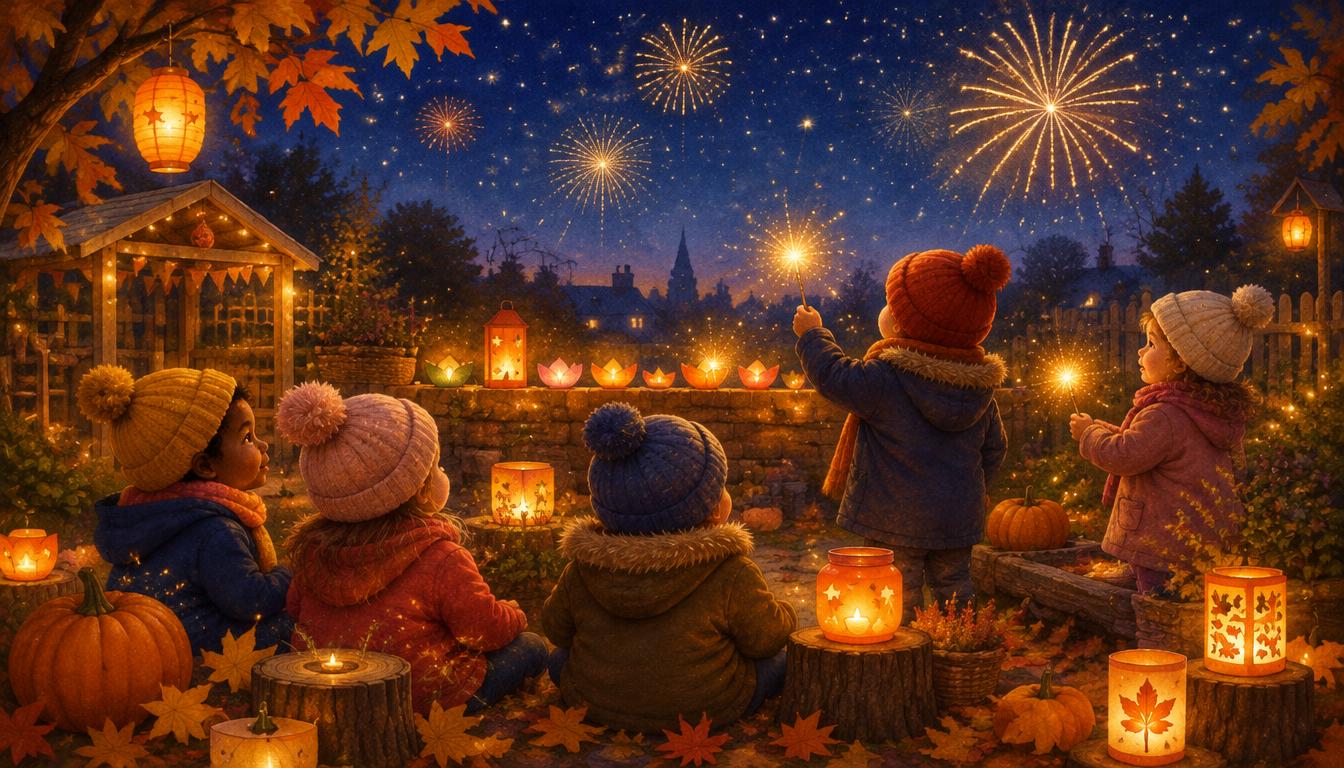
November is one of the most magical months in the early years calendar. The nights draw in, the world glows with lanterns and fireworks, and children arrive full of stories about sparklers, sweets and celebrations at home. For nursery managers, it is a gift of a month for learning — rich with light, colour, food, music and community — as long as we plan it thoughtfully and inclusively.
This guide walks through the season's festivals, with practical activity ideas and a special focus on inclusion: how to celebrate Halloween in ways that work for every child and every family.
Bonfire Night: light, sound and safety
Remember, remember the fifth of November. Bonfire Night is a sensory feast — crackling flames, whooshing rockets, the smell of bonfire toffee — and children are naturally captivated by it.
Activity ideas:
- Firework art with flicked paint, chalk on black paper, or glue-and-glitter burst pictures
- "Sparkler" mark-making: ribbons on sticks for swirling patterns in the air and in sand trays
- Edible sparklers: breadsticks dipped in melted chocolate and sprinkles
- A pretend bonfire built from logs, tissue paper flames and fairy lights, with songs around it
- Firework sound exploration: loud and quiet, fast and slow, using drums, shakers and voices
Bonfire Night is also a natural moment for early safety education. Talk about staying with a grown-up, standing back from fireworks, and why we never touch sparklers without an adult. Keep it matter-of-fact and reassuring rather than frightening.
Be mindful that some children — including some with SEND or sensory sensitivities — find the noise of real fireworks distressing. Offer ear defenders, a quiet indoor alternative during any noisy celebration, and warn parents in advance if you plan anything with bangs or whistles.
Diwali: the festival of lights
Diwali, the Hindu, Sikh and Jain festival of lights, often falls in late October or November. It celebrates the victory of light over darkness and good over evil — a beautiful theme for young children.
Activity ideas:
- Making clay or salt-dough diva lamps, decorated and "lit" with battery tea lights
- Rangoli patterns with coloured rice, lentils, chalk or flower petals
- Mehndi-inspired hand patterns drawn with brown pen or face paint on paper hands
- Story time with the story of Rama and Sita, told simply with props or puppets
- Sharing Indian sweets or simple cooking, checking allergies and dietary requirements first
If you have families who celebrate Diwali, invite them in. A parent showing children how they light divas at home, or bringing in a sari to touch, is worth more than any bought resource. Always approach families as partners, never as exhibits — ask what they would like to share, and respect a polite no.
Fireworks, noise and the ones who can't tell us
Both Bonfire Night and Diwali bring fireworks, and many neighbours light their own. Loud bangs are one of the most common causes of seasonal distress — and it isn't only children who suffer. Pets and classroom animals have no way to understand what is happening or to make themselves safe.
Who is most affected:
- Children with sensory processing differences, SEND or hearing sensitivity — some feel sudden bangs as physical pain
- Very young children who have no words for fear, so it surfaces as clinginess, weeping, regression or a sleepless night
- Dogs (especially older dogs and those with a rescue history), cats, rabbits, guinea pigs, birds and reptiles
- Horses and animals on nearby land, plus garden wildlife such as hedgehogs, birds and bats
Watch for the signs. In children: covering ears, freezing, hiding under tables, repeating the same question, wetting, or exhaustion the next day. In pets: pacing, trembling, hiding, drooling, refusal to eat, destructive scratching, or house-soiling in a previously house-trained dog.
In your setting:
- Know the likely nights — Bonfire Night itself, and the evenings around Diwali when neighbours light displays — and plan noisy outdoor play for earlier in the day
- Keep curtains drawn in the quietest rooms with music or white noise playing to take the edge off the bangs
- Keep a basket of ear defenders by the door so any child can help themselves, and say plainly that they can go to the quiet den at any time, no questions asked
- Never keep a child in a firework-watching group because the rest of the group is watching; a child who turns away has told you enough
- Move classroom animals — rabbit hutch, guinea pig cage, fish tank, terrarium — into a quiet interior room away from external walls and windows before the noise starts, with a hiding place left in and familiar bedding kept so the space still smells like home
- Do not handle a frightened animal that day; handling usually raises distress and a scared animal can bite. Note any change in eating or toileting in your animal-care record
Families often need reminding rather than telling, so a short, friendly note in your newsletter does the work:
- Walk dogs earlier in the day, before dark and before fireworks begin
- Bring pets indoors for the evening, even those with a secure garden, and keep cats inside with microchip details up to date
- Set up a safe den — a covered bed, a box on its side, a cupboard under the stairs — and leave the door open
- Play the radio or television at normal volume to mask the bangs, and stay calm yourself; pets read your behaviour before they read the sky
- Move hutches and cages into a quiet room with the radio on, and leave a hiding place inside
- Ask neighbours and local stables about display dates in advance, and speak to your vet early if your pet has struggled in previous years
Then turn the worry into learning. Have children make a calm corner for pets — a shoe-box bed, a blanket den, a card for the window that reads "the animals are resting". It builds empathy, it is genuinely useful, and it gives you a warm, non-preachy way to pass the message on to families.
Thanksgiving: gratitude and community
Thanksgiving is an American celebration, but its heart — gratitude, harvest and sharing food — translates beautifully into any early years setting, and many settings now mark it gently as a celebration of thankfulness.
Activity ideas:
- A "thankful tree": children add leaves naming people and things they love
- A shared harvest soup or bread-making session, with everyone contributing an ingredient
- Gratitude circle time: pass a special object and each child says one thing that made them smile
- Cards or drawings for people who help us — the cook, the cleaner, the lollipop person
- A friendship feast where children help set the table and serve one another
Keep the focus on gratitude and community rather than on the historical narrative, which is complex and not age-appropriate. The learning value is in turn-taking, thanking, sharing and noticing the good things in our lives.
Halloween: inclusive planning with spooky and non-spooky choices
Halloween falls on 31 October, but its celebrations spill into the first days of November — and it is the festival that most divides families. Some adore it; others avoid it for religious, cultural or personal reasons. Some children relish a friendly fright; others are genuinely frightened by masks, skeletons and pretend blood.
Inclusive planning means offering both: the usual spooky fun for those who love it, and equally exciting non-spooky alternatives so no child is left out or overwhelmed.
Spooky activities for children who enjoy them:
- A witches' and wizards' potion station with coloured water, ladles and "ingredients" jars
- Friendly monster playdough with googly eyes and pipe-cleaner arms
- A pumpkin patch role-play corner with dressing-up clothes
- Spider-web threading and creepy-crawly hunts in the tough tray
- A gentle spooky story corner with books like Funnybones or Room on the Broom
Non-spooky alternatives running alongside:
- Pumpkin exploration without the fright: scooping, counting seeds, painting and printing
- An autumn light and lantern theme — glow sticks, light boxes and shadow play
- "Orange and black" colour weeks: tigers, bees, autumn leaves and sunsets
- A harvest or " cosy autumn" dressing-up rail alongside the spooky costumes
- Owl, bat and cat activities framed as nocturnal animals, not Halloween creatures
Practical inclusion tips:
- Tell parents your plans in advance and ask about any concerns or objections
- Never insist a child wears a costume or joins a spooky activity — always offer the alternative
- Keep masks minimal; many young children find covered faces genuinely scary
- Check decorations at child height — what looks fun to an adult can loom over a three-year-old
- Give staff permission to dial celebrations up or down for their key children
- Make sure the non-spooky option is just as exciting, not a consolation corner
The goal is simple: every child should be able to join in the season's joy in a way that feels safe and fun for them, and every family should feel their beliefs are respected.
Keeping the magic compliant
Festivals are wonderful, but they still sit inside your safeguarding and health and safety duties. A quick seasonal checklist:
- Update risk assessments for candles (use battery tea lights), cooking activities and any outdoor fire or sparkler-themed play
- Check allergies and dietary requirements before any food activity, especially shared cultural foods
- Be sensitive with photography at events — check consent before sharing festival photos
- Record any incidents or near misses as usual, even during celebrations
- Brief agency or new staff on your festival plans and inclusion approach
- Include fireworks noise in your risk assessment — for children and for any animals in your care, indoors and outdoors
The November sparkle
There is something deeply special about a nursery in November: diva lamps glowing on the windowsill, firework pictures drying on the line, children stirring harvest soup and telling you what they are thankful for. Plan it well, include everyone, and you give children memories that glitter long after the last firework fades.
Festivals are not an interruption to learning. Planned with care and inclusion, they are some of the richest learning of the year.
Comments
No comments yet — be the first to share your thoughts.
Sign in or create a free account to join the conversation.
Get the Ofsted Readiness Checklist
The questions inspectors actually ask, room by room. Pop in your email and it's yours — just your email, no payment.
Send me the checklist